The clarity gap in expert-led marketing
In financial and professional services, marketing often defaults to what feels safe:
- Products
- Features
- Processes
- “What we do”
These things are factual. Accurate. Defensible. But they’re not what buyers are looking for.
Buyers aren’t searching for a specification sheet. They’re looking for reassurance.
They want to know:
- Is this relevant to me?
- Do these people understand my problem?
- Can I trust them to help me navigate it?
When marketing jumps straight to detail, it asks the buyer to do too much work.
And when people must work to understand your value, they don’t lean in - they move on.
Complexity isn’t the problem; communication is
This is an important distinction.
Expert-led businesses don’t need to simplify their offer by dumbing it down. They need to clarify what matters most.
Complexity becomes a barrier when everything is treated as equally important:
- Context is missing.
- Outcomes are buried beneath explanation.
When that happens, buyers aren’t confused because the work is complex. They’re confused because the message isn’t clear.
Clear marketing doesn’t remove expertise. It frames it.
It helps buyers understand why your expertise exists and how it helps them, before inviting them into the details.
If this feels familiar, it’s often a sign that the issue isn’t what you do - it’s how it’s being communicated.
We’ve broken this down further in our Fix Your Marketing in 5 No-Steps - a simple framework to help you sharpen your marketing without adding more noise.
Why features rarely sell on their own
Features are often where expert-led businesses feel most comfortable.
They’re tangible.
They demonstrate competence.
They show how much you know.
But features don’t answer the question buyers are quietly asking:
What would change for me if I chose you?
In financial and professional services, buying decisions are rarely purely rational.
Trust, confidence and perceived risk play a significant role.
Marketing that leads with outcomes helps buyers:
- See themselves in the story.
- Visualise progress, not just process.
- Feel confident they’re making a sensible decision.
Features support the decision. They don’t make it.
The problem with cookie-cutter messaging
Another common issue in expert-led marketing is similarity.
Phrases like:
- “Client-focused”
- “Tailored solutions”
- “Trusted advisors”
Are everywhere.
They’re not wrong.
They’re just meaningless without context.
When every firm sounds the same, buyers don’t compare - they default:
- To familiar names
- Recommendations
- Price
Clarity and specificity are what cut through.
Not louder claims.
The firms that stand out don’t just say they’re different.
They make it obvious - how and why that difference matters.
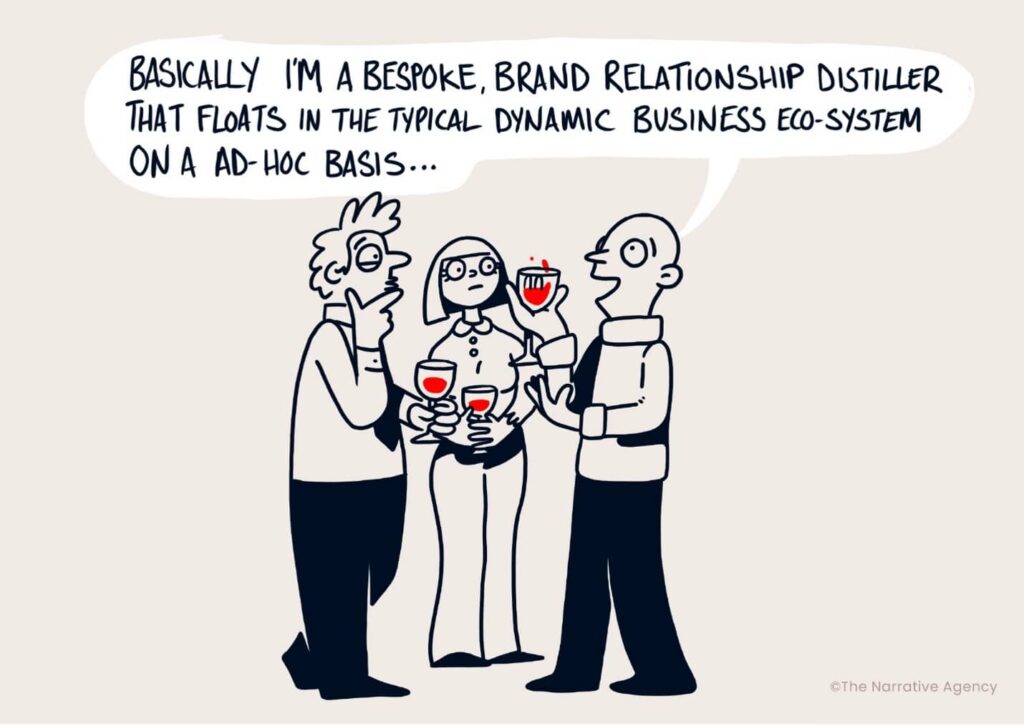
What good marketing for expert-led businesses looks like
Strong marketing in this space tends to share a few characteristics.
1. It starts with the client, not the service
It reflects real challenges, pressures and decision-making environments, not internal structures or job titles.
2. It explains why before what
Lead with outcomes. Add details second. Layer in expertise where it builds confidence, not confusion.
3. It builds trust gradually
Through consistency, relevance and insight - not big promises or short-term tactics.
4. It respects the reader’s intelligence
Clear doesn’t mean simplistic. It means considered, intentional, and well-judged.
A simple test for your own marketing
If you’re unsure whether your marketing is clear enough, start here.
Ask yourself:
- Could a potential client explain what makes us different after five minutes on our website?
- Do we talk more about what we do, or what changes for the client?
- Are we helping people feel confident, or asking them to work it out for themselves?
If the answers feel uncomfortable, that’s useful insight - not failure.
Clarity isn’t something most expert-led businesses get right the first time. It’s something they grow into.
Clarity is a competitive advantage
In crowded, expert-led markets, clarity is rare.
The businesses that grow sustainably aren’t always the most innovative or the most visible.
They’re the ones that make it easiest for clients to understand:
- Why they exist
- Who they are for
- What problems they solve
That clarity builds trust.
Trust builds momentum.
Momentum builds growth.
That’s not marketing theory. That’s how decisions get made.
Key takeaway
Make buyers see themselves in your story - not just your solution.
What to do next
If this kind of clarity matters to you, we share it regularly on LinkedIn through The Fluff vs The Stuff - our weekly take on marketing decisions that actually matter.
Prefer something more considered?
The No Fluff Brief is our monthly email with practical insight on marketing, PR and customer experience.
No spam. No waffle.
And if you’d rather talk it through, we’re always open to a conversation.